
End of Life Doulas
A compassionate, community-based companion.
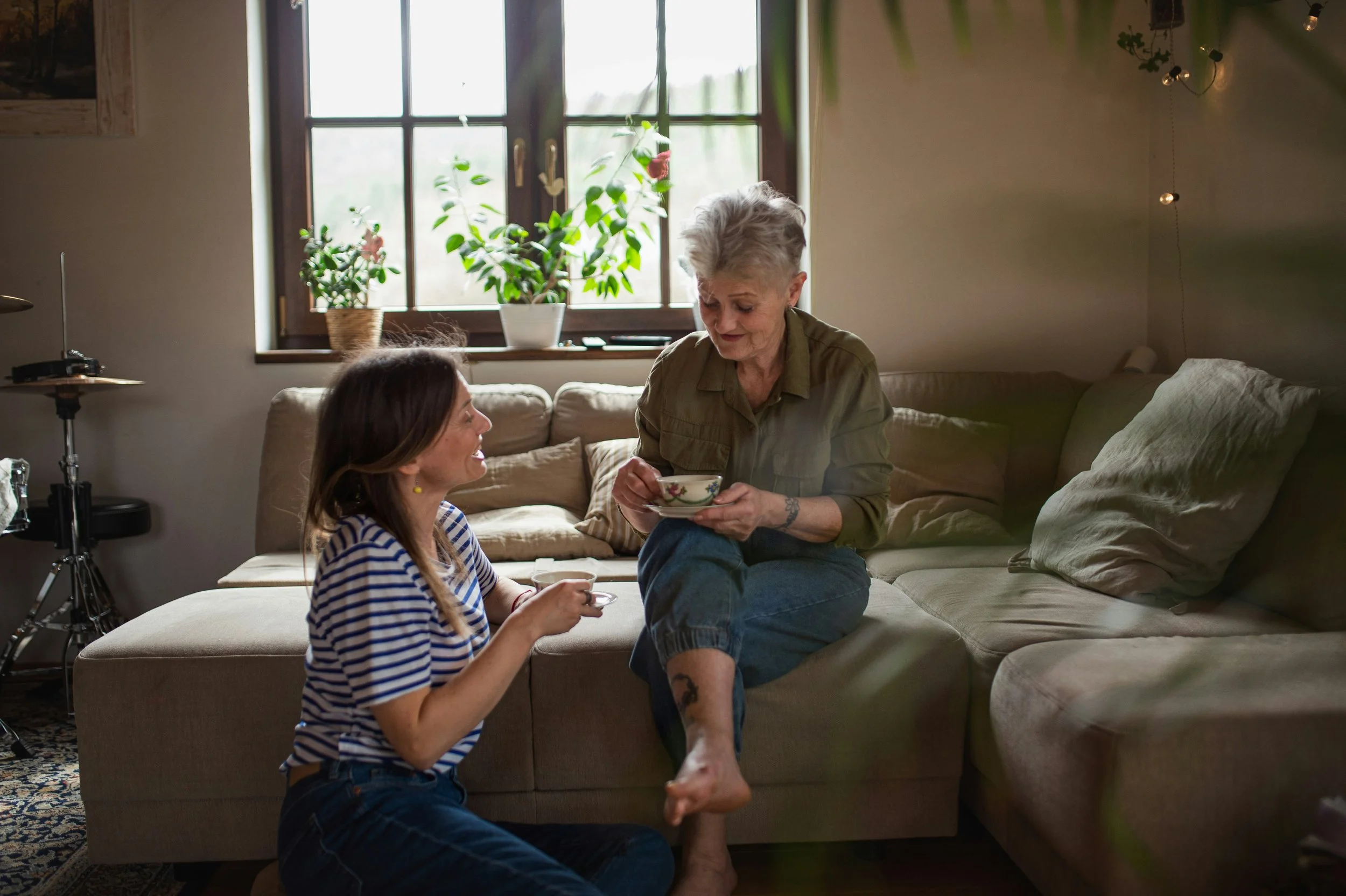
An end of life doula is there to accompany individuals and those important to them through the final phase of their life, providing guidance, support, and advocacy. Their role is not to replace medical care but to complement it, ensuring that people receive the holistic, compassionate support they need at the end-of-life.
Offering support at any age or stage of illness, our non-medical role is to preserve a person’s quality of life and sense of identity from the moment we are called upon.
About End of Life Doulas
By providing emotional, practical, and spiritual support, an end of life doula acts as a consistent and flexible presence to facilitate an end-of-life that it is as peaceful, meaningful, and dignified as it can be.
Doulas are based in their community providing support as independent practitioners or as volunteers. This gives them a uniquely flexible role, able to adapt to various types of support as a person or family’s needs change, and means that they are free to advocate for the person’s wishes which is a vital part of our role.
-
End of life doulas work alongside medical and care professionals, filling gaps where extra support is needed.
Their work is tailored to each person’s needs and wishes, and can include:
Emotional Support – Being present, listening, and offering reassurance to individuals and those important to them.
Advocacy – Ensuring that a person's wishes are heard and respected by those involved in their care.
Practical Assistance – Helping with advance planning documentation, coordinating other services, supporting life legacy work, or simply providing a calming presence enabling others to take a break.
Companionship – Sitting with the person, talking and listening, and helping them feel less alone.
After Death Support – Offering guidance and comfort to families after the person has died including supporting care of the body, support with death registration paperwork, and funeral planning.
-
All end of life doulas who are members of EoLDUK have undergone rigorous training with one of our partner organisations. The training equips them with the knowledge, skills, and death competency needed to provide non-medical, holistic support. They also work under our Code of Practice, have DBS/Disclosure Scotland checks, and receive ongoing mentoring and continuing professional development to maintain high standards of doula support.
-
End of life doulas support:
Individuals who are facing the end of life, whether due to age or terminal illness
Families and friends who need guidance, reassurance, and emotional support
Carers who may be overwhelmed and in need of respite or assistance
Wider communities who want to better understand how to support dying people
Our Approach
End of life doulas place the individual and those important to them at the centre of everything we do. Our goal is to create an environment where the person feels safe, supported, and respected. If there is something beyond our scope as doulas, we will let you know and aim to connect you with other services.


About Support
End of life doula support varies depending on a person's needs, but always includes a mix of practical and emotional support. Whilst different doulas bring their own personal approaches and experience, our practising members agree to follow our code of practice and work in accordance with our values.
Our role is to provide holistic, compassionate support, ensuring that a person's wishes, values, and preferences are respected at end-of-life. We welcome referrals from individuals themselves, as well as from family members, partners, friends, and healthcare professionals (with the person’s consent).
-
The support provided by an end of life doula is tailored to individual needs and circumstances. This may include:
Advocating for your wishes and ensuring they are upheld including attending medical appointments.
Encouraging and opening conversations about death to reduce fear and loneliness.
Assisting with Advance Planning, helping you document preferences and wishes for the end of life.
Helping you and those close to you navigate local health and social care services.
Supporting key decisions such as where you would like to spend your final days and who will provide your care.
Providing practical help, such as running errands, light housework, or assisting with ‘life admin’.
Acting as a point of contact and coordinator for other services.
Offering ongoing support in your home and working alongside healthcare professionals in hospitals, hospices, and care homes.
Organising respite support to allow unpaid carers to rest.
Sitting with the dying person to provide a calm, reassuring presence.
Assisting with formalities after death, including registration and funeral planning.
Continuing to offer emotional support for the bereaved in the initial weeks after death.
-
End of life doulas provide support in a variety of settings, depending on the needs and wishes of the individual. They often work in private homes, offering comfort and familiarity in a personal setting. In hospices, they complement the care provided by medical staff, while in care homes, they provide additional companionship and advocacy. They also support individuals and families in hospitals, ensuring they feel cared for and informed in a clinical environment. Beyond these settings, end of life doulas play a vital role in their communities, helping to build community knowledge around death and dying, and supporting compassionate communities that care for those at the end of life.
-
We also assist family and friends in providing care with confidence. This includes guidance, reassurance, and respite where needed. Our support can also continue with practical help and emotional support for those who are grieving in the initial weeks after death.
-
Our practising members are self-employed or have their own businesses/not-for-profit organisations. Some end of life doulas choose to offer their services free of charge whilst others charge for the support they provide. We strongly believe that ability to pay should not be a barrier to accessing end of life doula support. Our charity has an Access Fund which can cover the cost of doula support in certain circumstances – please get in touch via our contact us form to discuss this.

Start with a Conversation
The first discussion with your doula is an opportunity to get to know each other and ensure you feel comfortable. This is the foundation of a supportive relationship—one where we listen with empathy to understand:
What makes a good day for you
Your likes, dislikes, hopes, fears, and concerns
Where and how you would like to be cared for
How you like your living to be
What needs to be done and arranged so that you can ‘get on with the business of living’
Frequently Asked Questions
-
If you or someone close to you has been diagnosed with a life-limiting illness, is elderly, or approaching the end of life, you might consider the support of an End of Life Doula. Our role is to ensure that your wishes and choices are respected until the very end, providing care in the manner and setting you prefer.
We offer guidance through the myriad decisions you may face, helping you navigate this process with peace and confidence. Our approach is rooted in openness, aiming to create an atmosphere of considerate support, kindness, respect, and dignity for everyone involved.
-
End of Life Doulas provide practical, emotional, and/or spiritual support tailored to individual needs. This includes assisting with advance care planning, offering companionship, coordinating with other services, and supporting both the individual and those important to them throughout end of life. For a more detailed discussion, we are available for conversations via telephone or face-to-face meetings. Please complete the contact form to arrange this.
-
In addition to providing emotional and practical support at the end of life, our network includes doulas with expertise in a range of related services. Many of our doulas have additional skills and qualifications that can support individuals and families before, during, and after death.
We can connect you with doulas who are also Funeral Celebrants, helping to create personalised and meaningful ceremonies that honour the wishes and beliefs of the person who has died. Some doulas have experience as Funeral Directors, offering guidance on funeral planning, legal processes, and eco-friendly burial options.
End of Life Doulas are often well-connected within their local communities and can help signpost you to other relevant services. Whatever your needs, we will do our best to ensure you feel fully supported at every stage.
-
Our involvement is flexible and based on your needs. Initially, support might consist of regular phone calls or visits once a week or less. In other situations, a more continuous presence may be required, and some doulas may offer support such as overnight stays. If necessary, end of life doulas can work together in small teams to ensure consistent support particularly in the last days of life.
-
End of Life Doula support can commence at any stage, from the time of diagnosis to the later stages of life. Our involvement may last from a few days or weeks to several months or more than a year, depending on your needs. We are available when requested and remain for as long as needed.
-
Upon expressing interest in support, we will engage in an initial telephone conversation to understand your specific requirements. Following this, we will endeavour to connect you with an available doula who best suits your needs.
-
Yes, we adopt a holistic approach that encompasses both the individual and those important to them.
-
The initial telephone call with End of Life Doula UK is free of charge. During this conversation we aim to understand how best a doula can support you. Some of our members, who are self-employed or have their own doula organisations, charge a fee while others work on a voluntary basis. The specifics of any fees will be discussed transparently during the initial meeting with you. In certain situations, subsidised support may be available.
-
Yes, doulas can assist with Advance Planning, which involves discussing and documenting your wishes for end of life care. This may include decisions about medical treatment, where you would like to be cared for, and what kind of support you want in your final days. Having these plans in place can provide reassurance and clarity for both you and those important to you.
-
Yes. End of Life Doulas can act as advocates, ensuring that your voice is heard, and your wishes are respected. If you find it difficult to express your needs, a doula can support you in communicating with family members, healthcare teams, or other professionals involved in your care.
We can help you document your preferences through Advance Planning, ensuring that important decisions—such as where you wish to be cared for and what treatments you do or do not want—are recorded and understood. Our role is to empower you to make informed choices and to support you in having those choices upheld.
-
Yes, End of Life Doulas provide support wherever it is needed. While many people wish to remain at home, others may spend their final days in a hospice, hospital, or care home, where doulas can still offer valuable support.
In these settings, a doula can be a familiar, reassuring presence—helping you navigate the environment, ensuring your wishes are communicated to staff, and offering emotional support to both you and those important to you. We work alongside healthcare professionals to provide continuity of care, ensuring that you feel seen, heard, and supported no matter where you are.
-
End of Life Doulas will work collaboratively with health and social care professionals including doctors, nurses, palliative care teams, social workers, and carers. We do not replace medical or social care professionals but complement their work by providing non-medical support.
End of Life Doulas can help bridge gaps in care, ensuring that you and those important to you feel informed and supported. We respect professional boundaries and always work in a way that enhances—not disrupts—the care you are receiving. Our focus is on listening to you, helping you to make choices, and ensuring that all aspects of your well-being are considered.
-
Absolutely. End of Life Doulas support people of all faiths, spiritual paths, and belief systems, as well as those with no religious beliefs at all. Our role is not to impose personal views but to listen, respect, and uphold your wishes—whether that means incorporating spiritual practices into your care or ensuring a secular approach.
If you have specific spiritual or religious needs, your doula can help facilitate them, whether through arranging visits from faith leaders, creating meaningful rituals, or simply holding space for the beliefs that matter to you. Our commitment is to support you in the way that feels most authentic and comforting to you.
-
Yes, absolutely. End of Life Doulas provide support that is entirely person-centred and tailored to your individual beliefs, values, and preferences. We work with people from all backgrounds, including those who do not identify with any religious or spiritual beliefs.
Your doula will respect your outlook and ensure that your end of life experience aligns with what feels right for you. If you prefer a purely practical, emotional, or humanist approach, they will support you in that. The focus is always on honouring your choices, whether that includes spiritual elements or not.